A research team at the University of Sharjah in the UAE has developed a patented technology to produce activated carbon from spent coffee grounds (SCG) and plastic waste that is highly effective at capturing carbon dioxide (CO₂). This technology is gaining attention as an eco-friendly and practical method that simultaneously addresses both waste management and CO₂ reduction.
The scale of global waste generation and CO₂ emissions highlights the urgent need for integrated mitigation technologies. Global coffee consumption generates an estimated 8 million tons of waste annually, most of which ends up in landfills and emits greenhouse gases, such as methane. Simultaneously, according to the National Renewable Energy Laboratory (NREL), the common plastic, polyethylene terephthalate (PET), is manufactured at a rate of over 82 million metric tons worldwide each year for products like bottles and clothing, making it a major source of plastic waste. CO₂ is a primary greenhouse gas driving global warming, emitted from sources like fossil fuel combustion and industrial processes. Therefore, effective and sustainable CO₂ reduction technologies are critical. This new technology tackles both waste streams and the threat of global warming together.
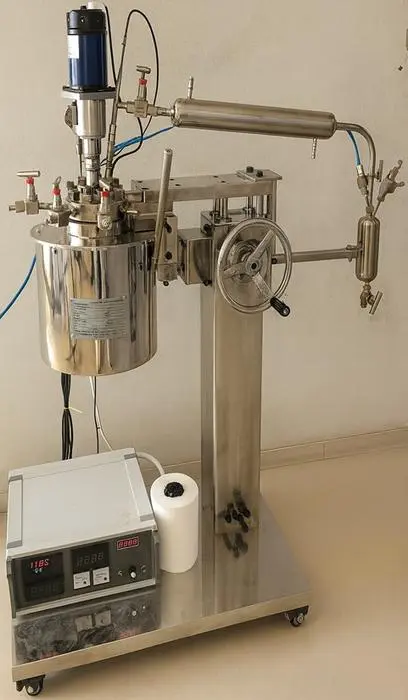
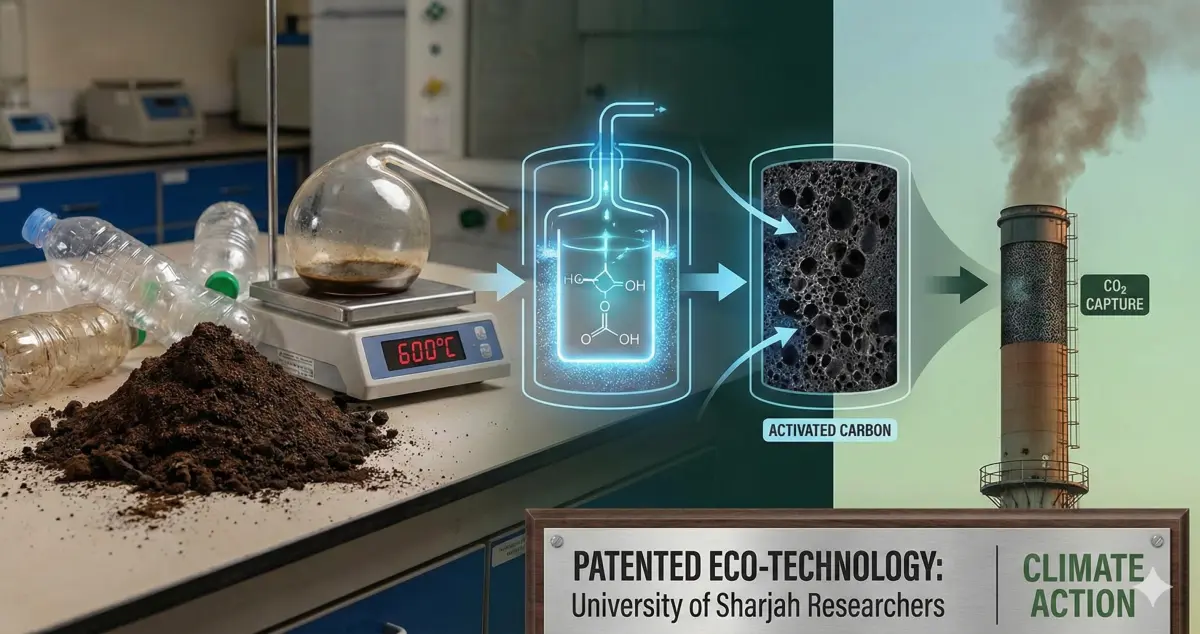
Reactor driving the carbonization of coffee and plastic waste into high-performance carbon.(Photo courtesy of University of Sharjah.)
The core innovation lies in a relatively low-temperature co-pyrolysis and potassium hydroxide (KOH) activation method that engineers a highly porous carbon structure. The technology synthesizes CO₂-adsorbing activated carbon by using SCG and PET as feedstock, subjecting them to co-pyrolysis (a controlled heating process), and combining them with KOH. KOH acts as the essential activating agent in this transformation. The interaction between the raw materials and KOH results in a porous structure with a substantially increased specific surface area and the introduction of oxygen functional groups, enhancing the material's CO₂ adsorption capacity. As a result, according to U.S. Patent 12,391,556 B1 filed by the team, the activated carbon demonstrated a high CO₂ adsorption rate of 10 mmol/g at 0°C and 1 bar absolute pressure. In addition, the process operates at a relatively low activation temperature of 600°C, reducing energy consumption and lowering production costs compared to conventional methods.
The activated carbon produced through this process offers strong CO₂ capture performance and is well-suited for treating industrial emissions from fossil-fuel sources. Beyond carbon capture, the material could also be used in water treatment, air purification, gas refining, and other environmental applications. Its relatively low activation temperature helps reduce overall energy demand, and when paired with renewable energy sources such as solar or wind power, the system could further enhance CO₂ reduction efficiency. By transforming waste into a valuable resource while simultaneously cutting greenhouse gas emissions, the technology stands out as a promising new tool in global climate-change mitigation efforts.