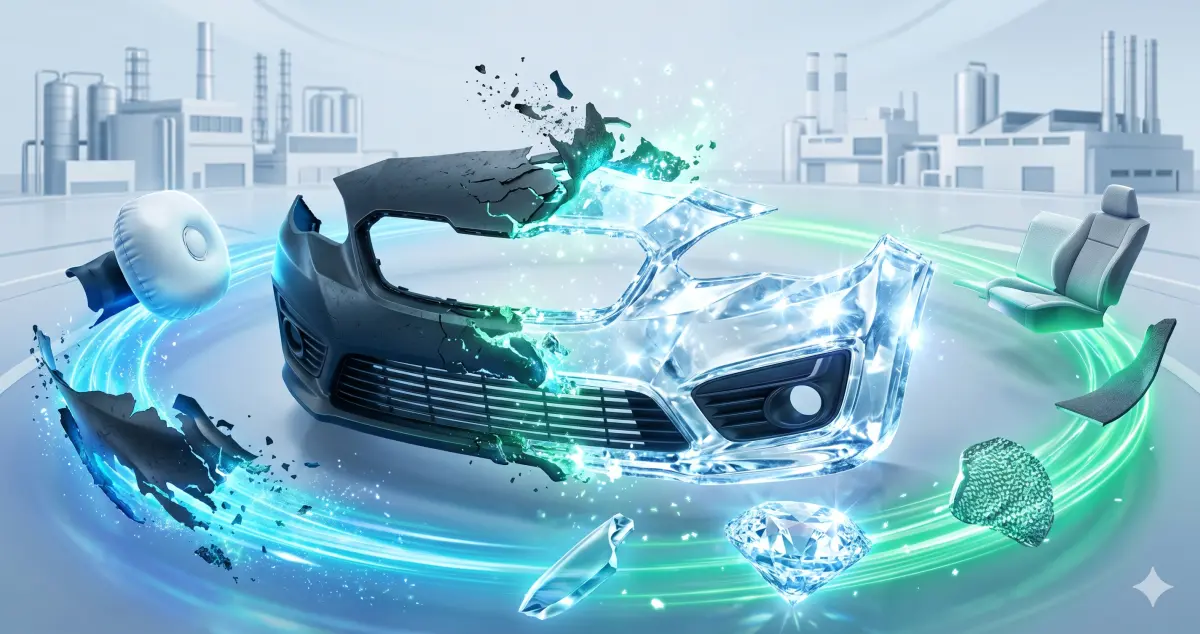
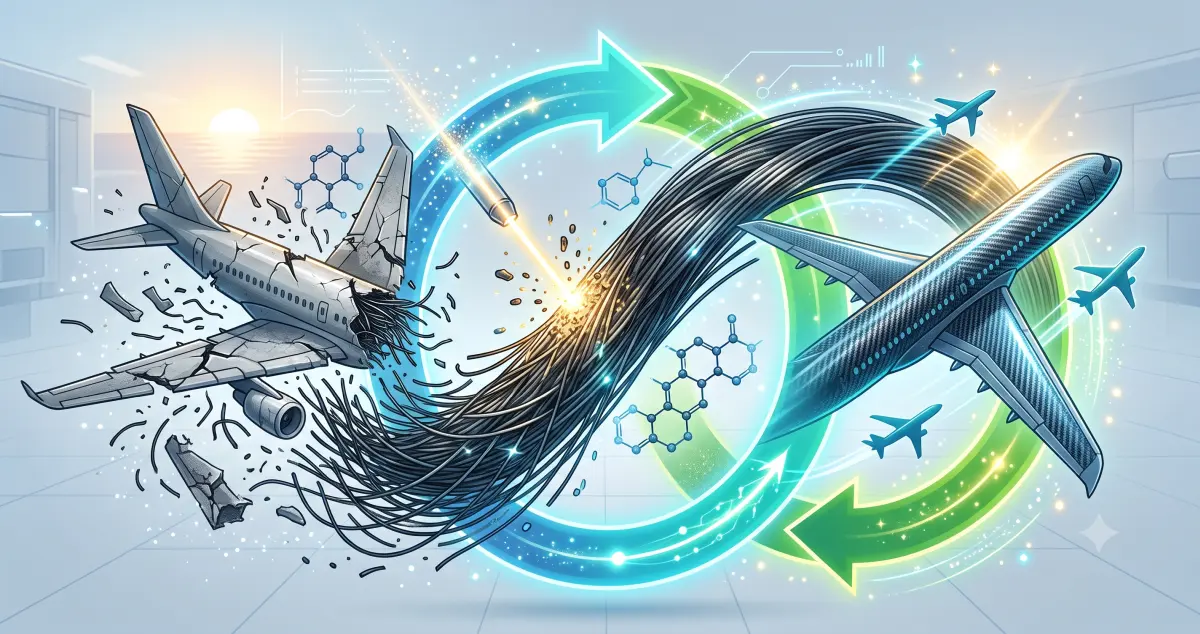
On May 18, 2026, REFINVERSE Group, Inc. announced that it has developed a technology capable of removing more than 99.9% of paint components from polypropylene (PP) used in automotive bumpers, producing high-quality recycled resin. The company positions the technology as its next breakthrough following REAMIDE®, a recycled nylon material derived from automotive airbags, and REOCA, a recycled asphalt modifier sourced from automotive interior materials. Together, these initiatives form part of REFINVERSE's broader effort to expand Car-to-Car recycling. Going forward, the company plans to strengthen collaboration with partner organizations as it works toward establishing mass-production technology and bringing the process to market at an early stage.
Why Bumper Recycling Has Lagged Behind
Japan generates approximately 2.52 million end-of-life vehicles annually, and bumper-derived plastic waste, including replacement parts, is estimated at 20,000 to 30,000 tons per year. Despite this substantial volume, large-scale bumper recycling has yet to gain meaningful traction. According to REFINVERSE, one of the primary obstacles has been the difficulty of removing paint components to a sufficiently high level of purity. As a result, recycled materials have often fallen short of virgin resin in terms of strength, durability, and surface quality, limiting broader adoption.
Applying Material-Stripping Expertise to PP Purification
The new purification process leverages two established technologies: the material-stripping expertise developed through REAMIDE®, the company's recycled nylon material derived from automotive airbags, and the polyethylene recovery process used in milk carton recycling. By combining these technologies, REFINVERSE can isolate the underlying polypropylene resin from the multilayer composite structure of painted bumpers. Following paint removal, the recovered bumper resin achieves a purity level of 99.9%, demonstrating high-quality material recovery.
The company will now move toward commercial-scale production by developing a collection network for used automotive bumpers and advancing proof-of-concept initiatives. The circular supply chain already established through airbag collection will serve as the foundation for the new bumper recovery system. In addition to Car-to-Car recycling applications, REFINVERSE is also exploring opportunities to deploy the technology across other polypropylene product categories.
Recycled-Content Requirements Drive Demand for Recycled PP
In the broader plastics recycling sector, Mitsubishi Chemical and ENEOS completed construction of a chemical recycling facility in July 2025 at Mitsubishi Chemical's Ibaraki Plant in Kamisu City, Ibaraki Prefecture. With an annual processing capacity of 20,000 tons, the facility is the largest commercial-scale plastic chemical recycling operation in Japan.
On the regulatory front, Japan's revised Act on the Promotion of Effective Utilization of Resources came into effect in April 2026. The legislation requires manufacturers in the automotive, home appliance, and packaging sectors to formulate plans for recycled-material usage and submit periodic reports on their progress.
In Europe, the final draft of the End-of-Life Vehicles (ELV) Regulation was published in February 2026, establishing targets requiring recycled plastics to account for 15% of the plastic content in new vehicles within six years of the regulation's entry into force, rising to 25% within ten years. Of that recycled content, at least 20% must be sourced from closed-loop recycled material derived from end-of-life vehicles.
As demand for recycled plastics continues to grow, REFINVERSE Group's ability to supply high-purity recycled polypropylene could play an important role in supporting the automotive industry's transition toward greater circularity.European Parliament