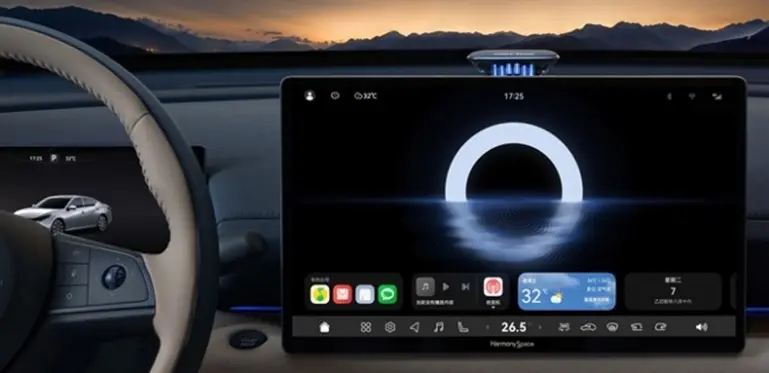
In January 2026, Mitsubishi Chemical announced that its plant-derived bio-based engineering plastic, "DURABIO," was adopted for the AI (Artificial Intelligence) speaker components of the new "Teana," launched in China by Dongfeng Nissan Passenger Vehicle Company in November 2025.
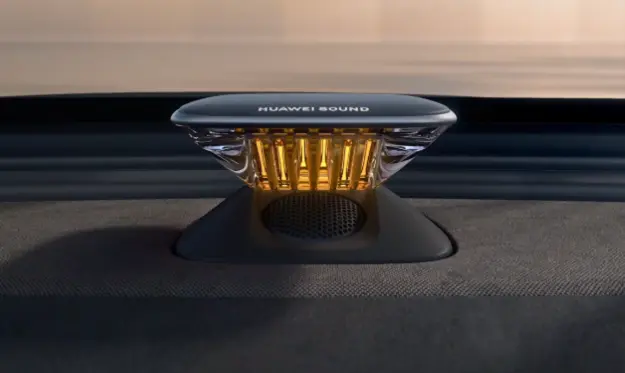
The AI speaker, mounted on the dashboard of the Teana, supports voice interaction and operation. It features an inverted pyramid design, and when turned on, six light pillars emit 256 colors of light, creating a crystal-like, highly colorful, and transparent texture.
For this adoption, the material was highly evaluated for its high aesthetic appeal, which is suited for creating a luxurious interior space, as well as for the intrinsic durability of the material itself.
Optical Properties and Durability of DURABIO
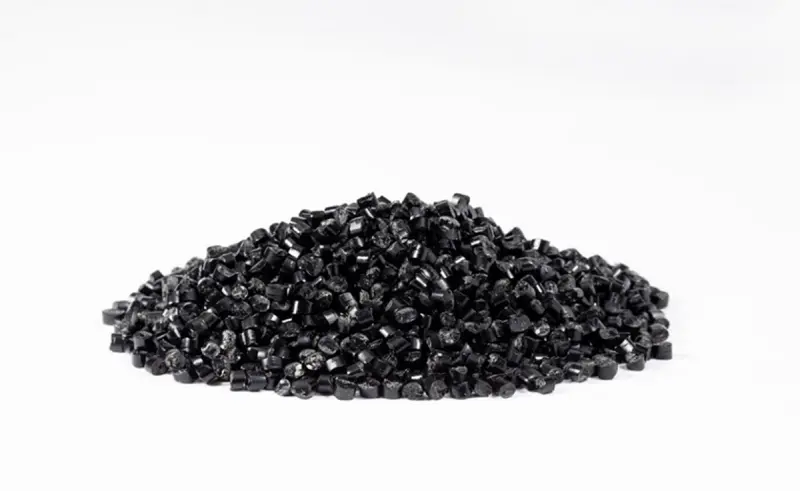
DURABIO, which was adopted for the speaker components, is a bio-based engineering plastic made mainly from plant-derived isosorbide. With a total light transmittance of 92%, it demonstrates high light transmittance over a wider wavelength range compared to conventional polycarbonate resins. It boasts excellent optical properties, including a refractive index close to that of acrylic resins and a high Abbe number.
Although it is a plant-derived polymer, it is not biodegradable and is designed as an engineering plastic for durable consumer goods. Due to its molecular structure lacking an aromatic skeleton, it is less susceptible to yellowing from light, providing excellent long-term light resistance and weather resistance.
Furthermore, its surface hardness is as high as F to HB on the pencil hardness scale, and its surface slip property is also good, meaning it combines physical durability, such as scratch resistance, that surpasses that of polycarbonate resins.
Because of its long-term durability, it can be used as a resin material without a coating process such as a clear coat. This also leads to a reduction in volatile organic compounds (VOC) and carbon dioxide (CO2) emissions during manufacturing.
Trends in Adopting Bioplastics for Automotive Components
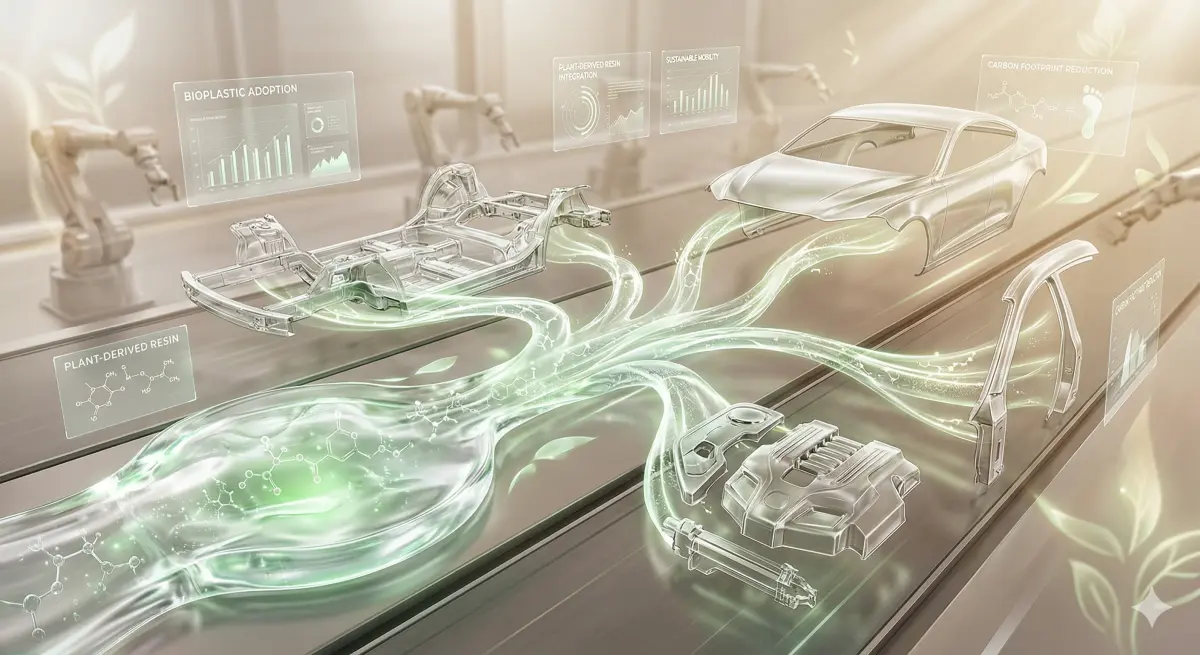
In the automotive industry, there are emerging movements to adopt plant-derived resins, possibly aimed at reducing environmental impact.
As a recent example, Camino announced in December 2025 that a composite material of wood powder and plant-derived bioplastic was adopted for the wheel caps of Suzuki's next-generation four-legged mobility vehicle, "MOQBA 2." According to Camino, efforts to adopt bioplastics—which were mainly used for applications requiring biodegradability, such as packaging materials—for automotive components that require durability and heat resistance are globally rare.

In terms of material development, new proposals for bioplastics that balance a premium feel with environmental consideration continue to emerge. NEC Corporation is deploying "NeCycle," a bioplastic made mainly from cellulose, a non-edible plant resource, that achieves a deep and beautiful "Urushi black" like lacquerware without painting. While there are no disclosed adoption cases at present, much like with DURABIO, omitting the painting process can contribute to reducing VOC and CO2 emissions during manufacturing. Therefore, it is envisioned for applications such as automotive interior materials that require highly decorative finishes.
Thus, we would like to keep an eye on future movements to utilize bioplastics not just as mere eco-materials, but as high-value-added materials.







![[ CHINAPLAS 2026 Opens ] From AI Molding to Circular Economy: The Forefront of Japanese Plastics Technology Taking on Global Trends](/_next/image?url=https%3A%2F%2Fmedia-en.plabase.com%2Fmedia%2Fenpb%2Fnews-2604-japanese%2Fnews-2604-japanese00.webp&w=3840&q=75)
